

New road rules: Dubai announces truck restrictions from October 1
Heavy vehicles can seek permits for essential journeys during banned hours
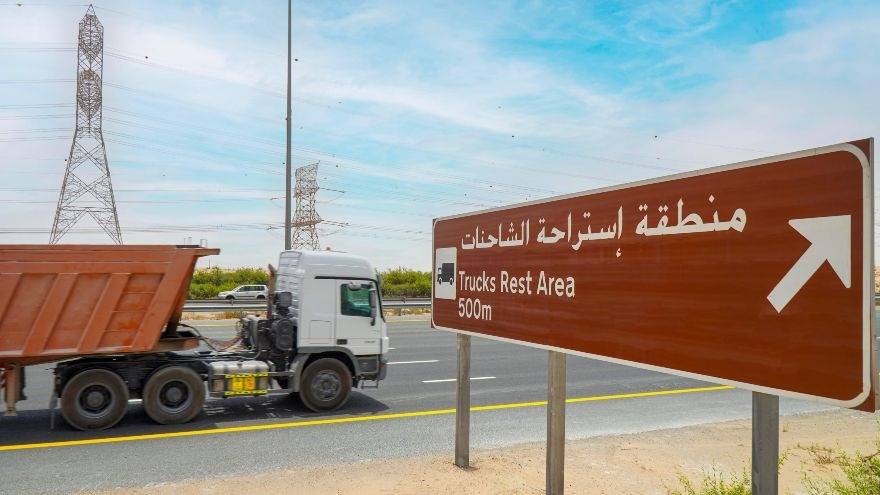
DUBAI – The Roads and Transport Authority (RTA) and Dubai Police will introduce new truck movement restrictions across roads in the emirate from October 1, 2026, as part of measures to improve traffic flow and road safety.
Emirates Road will be exempt from the new decision. The restrictions will apply according to the traffic conditions and timings already established for different roads and areas across Dubai.
The move is part of joint efforts to manage growing traffic volumes while taking into account the needs of the commercial transport and logistics sector. RTA said the measures are intended to support the smooth movement of goods, reduce congestion on key corridors, improve road capacity and shorten journey times.
New timings
Truck restrictions already apply to several roads and streets across Dubai, with timings differing according to the location, traffic corridor and congestion levels.
Several key roads and locations are subject to restrictions throughout the day. These include Al Qudra Street, Al Meydan Street, all crossings and Airport Tunnel.
Other major routes, including Sheikh Zayed Road and Beirut Street, as well as residential areas such as Al Mizhar, Muhaisnah and Oud Al Muteena, have a 16-hour daily restriction running from 6am to 10pm.
Urban roads face restrictions during three peak periods each day. Airport Street, Oman Street and Damascus Street are restricted from 6:30am to 8:30am, 1pm to 3pm and 5:30pm to 8pm.
RTA and Dubai Police will launch a comprehensive awareness campaign ahead of the implementation date. The campaign will target heavy vehicle drivers, truck owners, transport and freight companies, providing information about the applicable timings, the areas covered and alternative routes.
Drivers have been urged to plan journeys in advance, follow directional signs and comply with the applicable restrictions. RTA also advised truck operators to use designated rest stops during restricted periods rather than parking randomly on main roads, in residential districts or in unauthorised spaces.
Truck rest stops
The network of truck rest areas is being expanded to give drivers safer and more organised places to wait during restricted movement periods.
RTA has completed 14 of 16 planned rest stops across six strategic locations along major roads and in logistics areas throughout Dubai. The facilities are being developed in partnership with the private sector as part of efforts to strengthen the emirate’s transport and logistics infrastructure.
Capacity has also been increased at seven of the rest stops through the addition of 364 parking spaces. This represents a 50% increase, taking the total number of truck parking spaces at those facilities to 1,007.
RTA plans to establish four additional permanent rest areas in partnership with the private sector. The facilities are intended to reduce the use of undesignated parking areas on main roads and in residential and industrial districts, while providing drivers with safer places to wait.
The existing rest stops provide a range of services for drivers, including accommodation and rest facilities, prayer rooms, restaurants, retail outlets and fuel stations. More than 150,000 trucks use the facilities every month, while Dubai records approximately 400,000 truck journeys every day.
Heavy vehicle permits
RTA said the rest-stop network forms part of wider efforts to manage truck movement and support the efficient transportation of goods across Dubai.
Truck drivers and transport companies have been encouraged to use the facilities whenever movement restrictions are in force and to organise routes around the permitted travel periods.
For operations that require truck movement during restricted hours, companies can apply for a Mobility Permit for Heavy Vehicles in Banned Times and Roads. RTA said permits are intended for essential cases and applications can be submitted through its website via the Right-of-Way (ROW) Department.
The permit system provides a route for essential heavy vehicle movements during restricted periods, helping operators comply with the new restrictions and avoid traffic violations.
RTA has also called on truck owners and drivers to follow all applicable instructions and traffic signs, while avoiding improper parking that could obstruct roads or create safety risks for other road users.